What If Storage Could Fight Back? IBM Just Built It!
05 Jun 2026
What If Storage Could Fight Back? IBM Just Built It!
IBM has refreshed its FlashSystem lineup, and the pitch this time isn't just about speed or capacity — it's about storage that actively protects and optimizes itself using agentic AI, rather than sitting there as a passive repository.
Three Systems, One Autonomous Brain
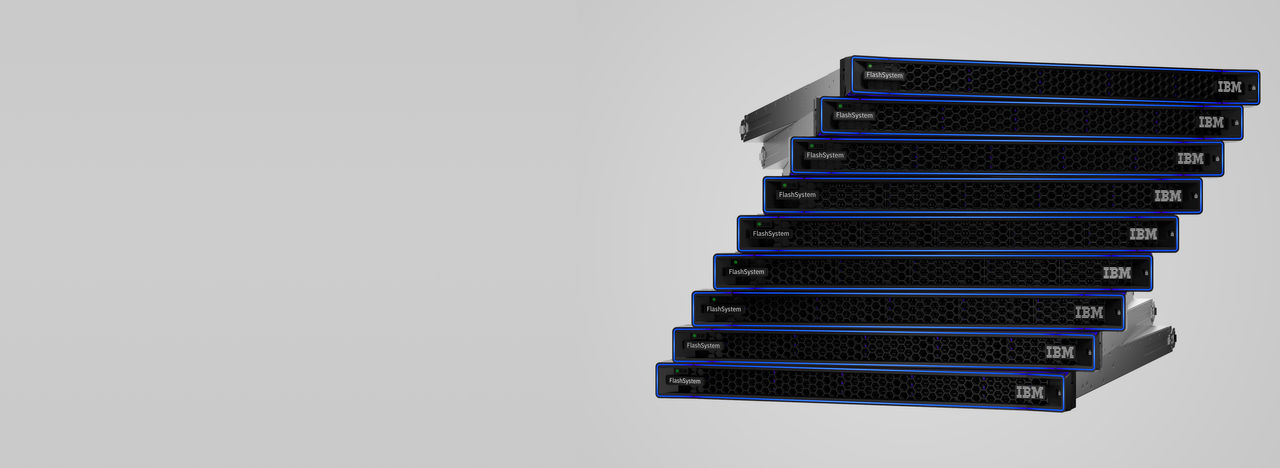
Three new systems arrived together. The FlashSystem 5600 is the compact option, packing up to 2.5 PBe into a 1U chassis, built for edge locations and branch offices where space is tight but enterprise-grade performance still matters. The 7600 steps up to 7.2 PBe and 4.3 million IOPS, aimed at large-scale virtualization and analytics workloads. The 9600 sits at the top for mission-critical operations, with up to 11.8 PBe, 6.3 million IOPS, and IBM claiming up to 57% lower operating costs compared to the previous generation. Across all three, IBM says the built-in autonomous intelligence can cut manual storage management work by as much as 90%.
The bigger story might be FlashSystem.ai, a data services layer trained on tens of billions of telemetry data points gathered over years of real-world operations. It's designed to make thousands of automated decisions a day — tuning performance, placing workloads, even preparing audit and compliance documentation without someone having to do it by hand.
Ransomware Detection in Under 60 Seconds
On the security side, the fifth-generation FlashCore Module is arguably the headline feature. It runs hardware-accelerated analytics on every I/O operation in real time, which lets it flag ransomware and other anomalies in under 60 seconds without slowing the system down, and IBM puts the false positive rate below 1%. For any organization that's been through a ransomware incident — or is bracing for one — that kind of detection speed is the difference between a contained disruption and a full operational crisis.
Built for Tight Spaces, Big Demands
The 5600 in particular looks well suited for organizations working with limited data center space but enterprise-level demands — regional banks, manufacturers, retailers, government agencies mid-way through modernizing their IT.
Hardware like this only delivers on the ransomware-detection promise if it's sized and configured for the workload it's actually protecting. That's usually where Perkom's IBM implementation team gets involved — sizing, integration, and making sure the security features are actually tuned rather than left on defaults.
Source: IBM Newsroom, February 2026
Author: Ghea Devita
Marketing Communication PT Perkom Indah Murni