Can Quantum Computers Finally Speak the Same Language? Cisco Says Yes!
22 May 2026
Can Quantum Computers Finally Speak the Same Language? Cisco Says Yes!
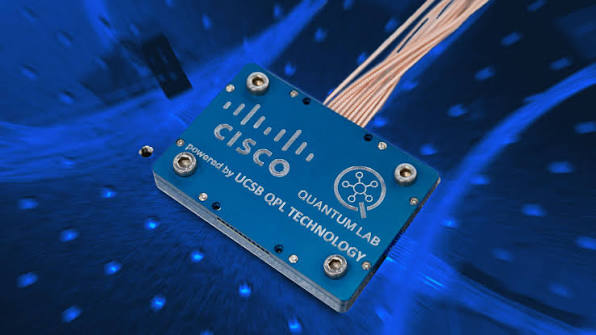
Cisco just showed off a working prototype it's calling the Universal Quantum Switch, and it tackles a problem that's been quietly blocking quantum networking from scaling: quantum systems from different vendors have never been able to talk to each other without corrupting the data in transit.
Quantum computers have largely operated in isolated silos. Each system encodes information differently, and until now nothing existed that could receive and translate all the major encoding schemes at once. Cisco's switch works as a conversion engine — it takes in a quantum signal, translates it into a common format for routing, and sends it on to the receiving system, all without disturbing the quantum state itself.
The specs are the part that's hard to believe. It runs at normal room temperature, works with existing fiber optic cable, switches connections in roughly one nanosecond, and draws less than a milliwatt of power doing it.
Four Encoding Modes, One Universal Bridge
The switch handles four major quantum encoding methods at once — polarization, time-bin, frequency-bin, and path — which effectively makes it a universal bridge between quantum ecosystems that previously had no way to interoperate.
Cisco is building this out with IBM, Qunnect, and Atom Computing as partners, aiming for something that's actually deployable rather than confined to a lab.
The Quantum Security Paradox
There's a security dimension here that cuts both ways. Quantum communication offers a level of security that's theoretically unbreakable by conventional computing. But more capable quantum computers also threaten to break the encryption protecting most of the world's sensitive data today.
Organizations that haven't started planning for post-quantum cryptography are sitting on real exposure — data encrypted today can simply be stored by an adversary and decrypted later once quantum computing catches up, a strategy known as "harvest now, decrypt later."
It's still early days for most organizations on this front, which is exactly why Perkom's quantum readiness assessments tend to start with the basics: figuring out which systems are even using cryptography that would be at risk, before worrying about the roadmap.
Author: Ghea Devita
Marketing Communication PT Perkom Indah Murni